
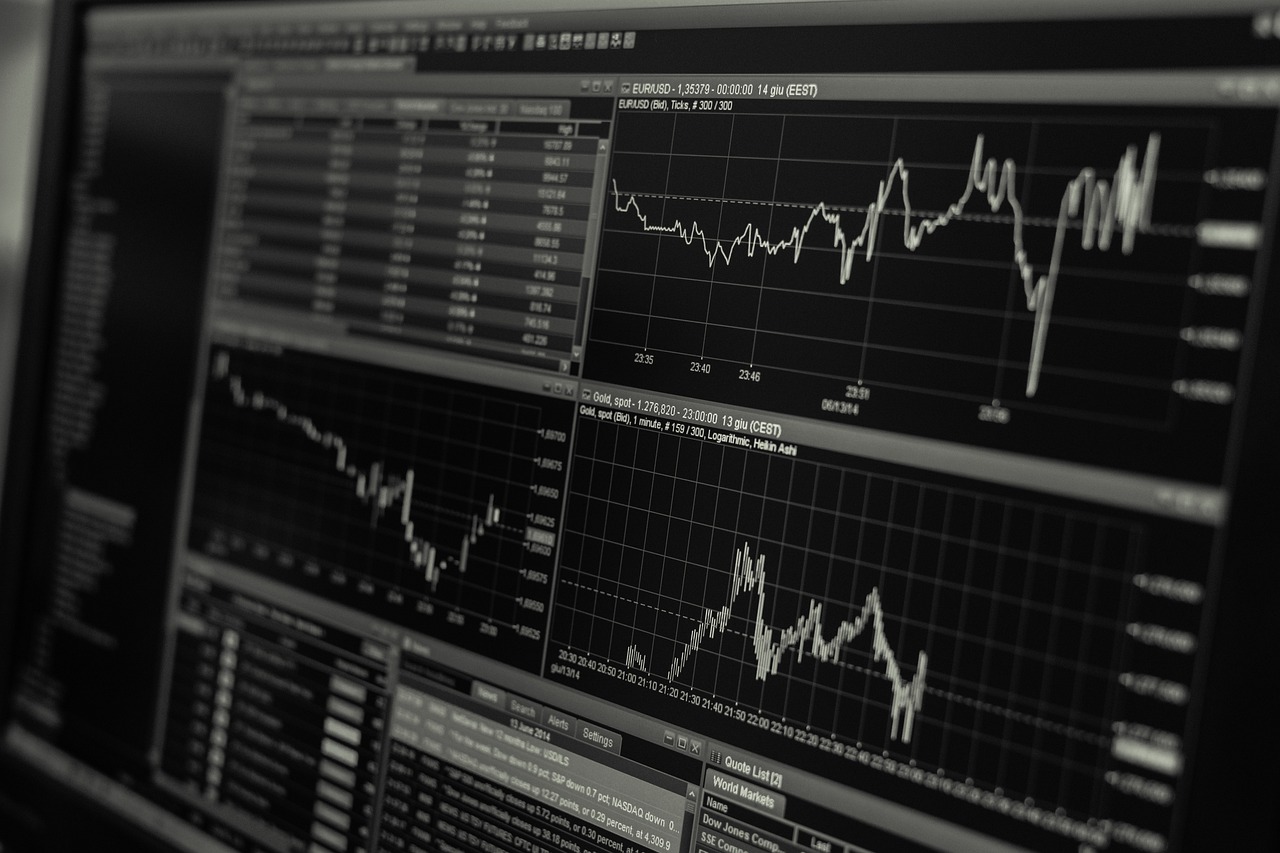
Understanding Market Volatility
Volatility in financial markets refers to the degree of variation in trading prices over time. It is a critical metric that investors and traders must grasp, as it directly impacts risk and potential returns. Highly volatile markets provide both opportunities and risks, making advanced algorithmic trading strategies essential for navigating these fluctuations effectively.
Characters of Volatile Markets
- Rapid Price Movements: Prices can exhibit sharp movements in short periods due to news events, economic indicators, or changes in investor sentiment.
- Wider Bid-Ask Spreads: Increased volatility is often accompanied by larger spreads, reflecting the uncertainty in pricing.
- Liquidity Challenges: Volatile markets can lead to liquidity issues, where the ability to buy/sell assets diminishes, affecting execution prices.
- Increased Risk: Higher volatility equates to greater risk; hence advanced risk management strategies are paramount.
Algorithmic Trading Basics
Algorithmic trading leverages computer algorithms to execute trades at optimal speeds and prices. It utilizes quantitative models and can employ strategies such as:
- Mean Reversion: Capitalizing on the assumption that prices will revert to their historical average.
- Momentum Trading: Buying assets that are trending up and shorting those trending down.
- Statistical Arbitrage: Exploiting price differentials among correlated financial instruments.
Advanced Algorithmic Strategies for Volatility
-
Volatility-Based Trading Models:
- Stochastic Volatility Models: These models assume that volatility itself is subject to random changes and can be modeled to predict price movements effectively.
- GARCH Models (Generalized Autoregressive Conditional Heteroskedasticity): Allow traders to forecast future volatility based on past price movements, essential for determining optimal entry and exit points.
-
Market Microstructure Analysis:
- Understanding the mechanics of how trades are executed provides insight into price formation during volatile periods. Analyzing order flows and liquidity can refine algorithmic trading strategies to optimize execution.
-
Sentiment Analysis:
- Leveraging machine learning to analyze social media, news articles, and market sentiment can provide anticipatory insights into market volatility, giving traders a competitive edge.
-
High-Frequency Trading (HFT):
- Utilizing algorithms to capitalize on minute price discrepancies, HFT can flourish in volatile markets where price oscillations occur rapidly.
- Adaptive Algorithms:
- Machine learning algorithms can be developed to adapt to changing market conditions in real-time. These adaptive systems monitor volatility and adjust trading parameters, such as stop-loss and take-profit levels, dynamically.
Risk Management Techniques
Implementing risk management is crucial, especially in volatile markets. Some techniques include:
- Dynamic Position Sizing: Adjusting position sizes based on current volatility levels helps mitigate risk during unforeseen market conditions.
- Stop-Loss and Take-Profit Orders: These orders limit potential losses and lock in profits but require careful calibration during high volatility.
- Diversification: Spreading investments across various assets can reduce risk, but in highly correlated volatile assets, diversification may prove less effective.
Backtesting and Optimization
Backtesting forms the backbone of strategy development in algorithmic trading. This involves simulating a trading strategy using historical data to evaluate its viability. Key aspects include:
- Selecting the Right Time Frame: Testing over various periods allows for understanding how well the strategy adapts to different market conditions, particularly during periods of high volatility.
- Transaction Cost Analysis: It’s essential to account for slippage and spreads, which can impact the profitability of strategies during turbulent times.
- Parameter Optimization: Using techniques such as grid search or genetic algorithms to find the optimal parameters for trading strategies can improve performance significantly.
Data Sources and Tools
The effectiveness of algorithmic trading strategies relies heavily on quality data. Key resources include:
- Market Data Feeds: Real-time price data and historical tick data from reliable sources (e.g., exchanges, financial data providers).
- Alternative Data: Non-traditional data sources such as sentiment data, satellite images (for commodity trading), and macroeconomic indicators can offer unique insights.
- Programming Languages and Tools: Proficiency in programming languages like Python or R, alongside tools such as MATLAB or specialized trading platforms (like MetaTrader or Interactive Brokers API), is vital for developing and executing algorithms.
Monitoring and Maintenance
Maintaining and monitoring algorithms post-deployment ensures continued effectiveness:
- Regular Performance Evaluation: Continuously assess algorithm performance, adjusting strategies based on changes in market dynamics and historical performance feedback.
- Anomaly Detection: Establish systems that alert traders to unexpected deviations in performance, which may indicate underlying issues.
The Importance of a Trading Plan
A well-defined trading plan is crucial in volatile markets. Elements of a trading plan might include:
- Goals and Objectives: Clearly outline financial goals, risk tolerance, and specific metrics for success.
- Criteria for Trades: Define specific conditions under which trades will be executed based on technical indicators or market signals.
- Review Process: Set a systematic schedule for reviewing traders’ performances to incorporate lessons learned into future strategies.
Continuous Learning and Adaptation
The financial markets are dynamic, and continuous education is essential for traders. Key strategies include:
- Participating in Webinars and Workshops: Keeping abreast of new techniques and technologies, as well as case studies of successful trading strategies.
- Networking: Engaging with other traders in forums and conferences can provide valuable insights and shared experiences, enhancing trading approaches.
Conclusion
Mastering advanced algorithmic trading strategies for volatile financial markets requires a mix of technical skills, robust risk management practices, and a commitment to continuous learning and adaptation. By leveraging advanced statistical models, sentiment analysis, and machine learning, traders can create effective algorithms that capitalize on the opportunities presented by market volatility while effectively managing risk. The future of trading lies in the capacity to innovate, adapt, and execute at speeds and accuracies never before possible.